-
You all probably know by now that our Department of Industrial Design is incredibly active in international exchange programs—but today, I want to share a special story from our workshop with students from Shibaura Institute of Technology in Japan! It was a week filled with collaboration, culture, creativity, and connections that crossed both language and borders. Let me walk you through what made this experience so meaningful! The workshop between the Department of Industrial Design at Kookmin University and Shibaura Institute of Technology has been continuously held since 2016. It is divided into summer and winter sessions—during the summer, Shibaura students visit KMU in Seoul, and in the winter, KMU students travel to Tokyo to collaborate with Shibaura students. This year’s KMU-SIT Green Design Summer Workshop brought together 30 students from KMU and 30 students from SIT, totaling 60 participants. Students from both universities were mixed into 10 teams, working together to explore and develop creative solutions under the theme of Green Design. It was a valuable opportunity to exchange ideas across cultures, collaborate on a shared project, and build meaningful connections through design. Before diving into the main design project, we started with a team lunch to help everyone get to know their teammates better. We shared stories about our majors, our universities, and the areas of design we’re personally interested in. At first, things felt a little awkward—but as soon as we started talking about design, our common passion, the atmosphere quickly became more relaxed and friendly. The Shibaura students introduced us to Japan’s current design trends and the kinds of projects they work on at school, which was really fascinating. In return, we shared insights about Korean design culture, and the conversation naturally turned into a fun and engaging cultural exchange. The project was led by Professor Emmanuel, who guided us through the overall process. Before we began our team meetings, he gave an inspiring lecture on what Green Design really means and how we could approach it systematically. One particularly memorable part of his lecture was the 10R checklist methodology: Refuse, Reduce, Redesign, Reuse, Repair, Refurbish, Remanufacture, Repurpose, Recycle, and Recover. It gave us a structured framework for sustainable design thinking. He explained each step with real-world examples, which made it easy to understand and directly applicable to our own projects. After the lecture, it became much easier to talk with our teammates and set a clear design direction using this method. Once the lecture ended, we moved into the main team meetings. Everyone shared their ideas, exchanged feedback, and gradually shaped the design together. Hearing perspectives from students at another university was genuinely exciting. We discovered how our ways of thinking were similar, yet different—especially when discussing environmental issues and possible solutions. It was refreshing to notice cultural differences between Korea and Japan in how sustainability is approached. Even with limited time, each team pushed themselves to finalize their concepts and prepare for a short presentation. It was truly impressive to see how many creative and well-thought-out ideas emerged in such a short span. During the final presentation, each team had one minute to introduce their project. Even though we spoke different languages, we could clearly understand each other's ideas through design sketches and prototypes. One team proposed furniture made from recycled materials, while another introduced an eco-friendly packaging solution. Every team took a unique approach to tackle green design challenges—and it was amazing to see so much diversity and originality. After the presentations wrapped up, we all headed to Myeongnyun Jinsagalbi for a group dinner to celebrate the end of the workshop and share memories together. It was a great opportunity to hear even more about Japanese culture, and it made for a really warm and meaningful conclusion to the experience. A few days after the workshop ended, a booklet compiling all of our project outcomes was distributed. It was so nice to be able to take a closer look at the other teams’ work, especially the ones we couldn’t fully explore during the short presentation time. Seeing our own team’s project printed in the booklet gave us a real sense of pride. With all the creative ideas compiled into one volume, it felt like flipping through a mini design exhibition. It’s definitely something I’ll treasure as a reminder of such a special experience. Although the workshop lasted only a single day, it was an incredibly valuable experience—working side by side with students from another country and university, building friendships, and creating meaningful outcomes together. More than anything, I realized that despite differences in language and culture, we could communicate through the shared language of design. If you missed out on this summer’s workshop, I highly recommend applying for the winter session! During the winter workshop, KMU students will travel to Japan and get the chance to experience Shibaura Institute of Technology’s campus firsthand— which makes it an even more unique and memorable opportunity!
-
21
- 작성자관리자
- 작성일2025-06-20
- 179
- 동영상동영상
-
A team of recent graduates—Donghee Hyun, Dongheun Kang, and Harim Choi—presented their poster paper at the prestigious ACM CHI 2025 conference, held from April 26 to May 1. Their research was based on their graduation project “HOOAH”, conducted under the guidance of Professor Hyoseon Kwon, and evolved into an empirical study worthy of international recognition. The CHI Conference (Conference on Human Factors in Computing Systems) is the world’s leading academic venue in the field of Human-Computer Interaction (HCI), where innovative research and groundbreaking ideas from around the globe are shared. The research titled “VibroCushion: Design for Inclusive Connectedness Between Deaf and Hearing in Meditation Practice” proposes an interactive cushion-shaped device designed to enable both Deaf and hearing individuals to meditate together. Recognizing that most existing meditation programs rely heavily on spoken language—making them less accessible to the Deaf—the study presents an innovative approach that utilizes tactile feedback, allowing both groups to immerse themselves in the practice simultaneously. link to the paper : https://doi.org/10.1145/3706599.3719745 The students organized a co-design workshop involving both Deaf and hearing participants to identify the optimal conditions for tactile feedback. Based on these insights, they structured an actual meditation session. In the next phase, a hearing meditation instructor and a Deaf beginner conducted a joint meditation session using the VibroCushion, followed by post-session interviews. The results showed that this tactile interaction–based meditation device significantly enhanced participants’ sense of immersion and greatly strengthened the feeling of connectedness between hearing and Deaf individuals. Moreover, the study revealed the potential of non-verbal communication through tactile cues, offering valuable insights for future research in inclusive design. The project was carried out with the active support of the Seongbuk-gu Sign Language Interpretation Center, and it has been recognized as a meaningful example of design practice grounded in a deep understanding of Deaf culture. During the co-design workshop, rich cultural and experiential exchange took place between Deaf and hearing participants, presenting a strong case for inclusive design in action. The first author, Donghee Hyun, reflected: “It was a meaningful experience that made me deeply reflect on what kind of value a designer can create between technology and people. Watching Deaf and hearing participants meditate together and feel connected through the VibroCushion was incredibly moving. I hope to continue growing as a designer who creates meaningful change through human-centered design.” The Late-Breaking Work track at CHI 2025 received a total of 1,888 submissions, of which 620 were accepted, resulting in an acceptance rate of 32.83%. Meanwhile, Professor Hyoseon Kwon also presented a Full Paper at this year’s conference. Her research explored how hybrid gifts, exchanged through IoT devices in everyday life, are experienced and valued within interpersonal relationships. The CHI 2025 Full Paper track had a highly competitive acceptance rate of 24.9%. link to the paper : https://doi.org/10.1145/3706598.3714048 This research was supported by the Excellent Young Researchers Program funded by the Ministry of Science and ICT (2022–2025).
-
19
- 작성자관리자
- 작성일2025-06-19
- 149
- 동영상동영상
-
Hi! Sorry to keep you waiting— The weather’s already getting pretty warm, but I still wanted to take a moment to share my experience from the SIT Workshop I attended over winter break. The workshop ran from February 13th to 20th—just like in previous years, it lasted about a week, but the schedule was a bit different this time! From the 13th to the 15th, we stayed at a seminar house in Atami, a coastal resort town in Japan. During those three days, we conducted field research with our teams while also enjoying the various facilities available at the seminar house—like the ping pong room and karaoke space. Thanks to that relaxed environment, we were able to naturally grow closer as a team, and it really made the experience feel special. Our team visited the MOA Museum of Art in Atami, where we got to appreciate traditional and contemporary Japanese artworks. I found myself constantly jotting down thoughts and insights during the fieldwork, thinking they'd definitely help later when interpreting our workshop theme. I'll also include some photos that capture the warm, collaborative, and cozy atmosphere of the Atami seminar house! (And no—we didn’t just play around the whole time!) Honestly, I think those three days in Atami were the key to forming a real connection with our Japanese teammates. And then, on February 16th, the day we had all been waiting for finally arrived— our first full day at Shibaura Institute of Technology (SIT)! The theme of this year’s project was “The Boundary Between the Everyday and the Extraordinary.” It was a familiar type of design project, but the fact that it was taking place in Tokyo, with Japanese teammates, in a completely new environment, made it feel like a perfect reflection of the theme itself. It was an extraordinary experience hidden within the everyday flow of design work. Of course, like any project, we hit some roadblocks. For us, one of the biggest challenges was the language barrier—but every member of our team, both Korean and Japanese, gave it their all to bridge that gap and bring the theme to life. We sketched wireframes together on the whiteboard, relied on translation tools, and kept the conversation flowing as best we could—and before we knew it, the day was already over! I’ve pulled my fair share of all-nighters back in Korea, but working late into the night in a completely unfamiliar place like Tokyo felt different. Just like our theme, each day felt like a fluid blend of the ordinary and the extraordinary—a back-and-forth dance between comfort and challenge, routine and novelty. :) On the afternoon of February 17th, our second day at Shibaura Institute of Technology, we had the chance to experience a rich cultural exchange. There was a yukata experience, followed by a talk from Professor Yang about Japanese universities and the unique job-hunting culture in Japan. One thing that really stood out to me was how, unlike Korea, Japanese students typically begin job hunting in their third year, go through internships, and often secure full-time positions even before graduation. It was such a different system—and super eye-opening. The highlight of the afternoon was definitely the special lecture by a KMU alumnus currently working at SONY Japan. Hearing firsthand about their experience working abroad at a major company, and getting to see their actual portfolio, sparked serious interest among many of us in overseas employment. That kind of real, behind-the-scenes story is one of the biggest strengths of this workshop, I think. If you're even remotely curious about working abroad or diving into the Japanese design industry, I highly recommend the SIT Winter Workshop. It’s not just a learning opportunity—it’s a glimpse into what your future could look like. And finally, the project presentation day arrived! Each team turned their final outcome into a panel and displayed it on the whiteboards, creating a sort of open exhibition where everyone could freely walk around and check out each other’s work. After that, we moved on to the formal team presentations in front of the professors. Since every team was made up of both Korean and Japanese students, the presentations were given in two languages, depending on the speaker. That experience alone was incredibly unique and memorable. Personally, one of the most impressive moments for me was seeing Professors Nam Won-seok and Yeon Myeong-heum from our Department of Industrial Design give feedback in fluent Japanese. It made me realize that what truly matters isn’t the language itself, but the clarity of your message and the sincerity of your delivery. After all the presentations, we had a small awards ceremony to close the event. Regardless of who received awards, it was clear that every team produced high-quality work, especially considering how short the workshop was.To everyone who participated: you all did an amazing job! And to those thinking about joining next time—trust me, it’s worth it. At the final group dinner, everyone was finally able to relax and let loose. Over delicious food and drinks, we laughed, shared stories, and had such a good time that the language barrier practically disappeared. We even made plans with some of our Japanese teammates to meet up again this summer when they visit Korea! Maybe it’s because we share similar dreams, struggles, and passions as design students that we were able to connect so naturally and deeply. Of course, there are so many little stories I could tell—but I’ll stop here for now. Looking back, this entire workshop was such a meaningful experience. Time flew by so fast, and it was clear how much effort and heart went into making it all happen—not just from the students, but from the professors and organizers on both sides. For those of us who participated, it was a truly valuable opportunity that gave us fresh insights, new friendships, and a broader perspective. This workshop is held annually, alternating between KMU in the summer and SIT in the winter, so if you're even a little interested, I wholeheartedly recommend applying. You won’t regret it!
-
17
- 작성자관리자
- 작성일2025-06-19
- 133
- 동영상동영상
-
Hi, nice to see you! Today, I’d like to share a review of ID Week, which took place from March 24 to March 28. I’ll walk you through how the workshop was carried out, and even show you the work of the 1st, 2nd, and 3rd place teams! ID Week was a brand-new workshop introduced this year. Every student in our department participated, and we were randomly assigned into teams to carry out a project. Since it was the first time a workshop like this was held, I felt both excited and nervous. I was curious about who I’d be teamed up with and what kind of project we’d work on. With that anticipation, I headed over to the opening session of ID Week, held in the annex building. The theme of this ID Week was “Discovering Form in Seoul.” Each team was assigned a district in Seoul to visit, observe, document through photos, reinterpret, and ultimately create a form or product inspired by what they found. When I first saw the theme, my reaction was, “This sounds so fun!” The idea of exploring Seoul with classmates—taking pictures, and even creating something from what we saw—was super exciting. Honestly, there were quite a few classmates I only knew by face and had never really talked to. But this project gave us the perfect opportunity to get to know each other better. During our fieldwork, we not only observed interesting forms and structures but also shared meals and had a great time together. It felt refreshing and truly meaningful. Each team was randomly formed, and then the team leaders went up front to draw lots to determine which district their team would explore. It was definitely a moment of mixed emotions—everyone was secretly hoping for a district close to school!Once the districts were assigned, team members gathered, introduced themselves, and got to know each other. Even though we’re all in the same department, there were classmates I had never spoken to before, and some I only recognized by face.With the atmosphere still a bit awkward, we discussed how we wanted to approach the project and which neighborhood within our district we should visit. Then, we headed out together for our first fieldwork!That’s how we kicked off our fieldwork! Some of us visited neighborhoods we’d never been to before, while others returned to familiar places—but I think it was the first time we all really observed the city with such detail. As we focused on the atmosphere, colors, street layout, signs, wall textures, and other visual elements unique to each area, we began to truly appreciate how distinct and full of character Seoul’s districts are. We found ourselves asking questions like: “What visual elements capture the essence of this neighborhood?” “What kind of image does this place evoke?” “What kind of form or structure could we create from this?” As we walked and took photos, ideas started to take shape. We also had fun talking with upperclassmen and underclassmen—swapping stories about school life and sharing laughs. It was a simple activity, but it ended up being a deeply meaningful day. After the fieldwork, each team began analyzing the visual elements of their assigned district in earnest. We looked through all the photos we had taken, discussed what stood out, and sorted them to better understand the visual identity of the neighborhood. From there, we extracted key concepts and created mood boards to guide our design ideas. Then, on the morning of March 26, we headed to the annex building for the Spaghetti Challenge, an event hosted by the student council. The goal was to build the tallest tower using only spaghetti noodles and marshmallows—and the team with the highest structure won a prize! It turned out to be way more fun than we expected, and the room was filled with laughter the entire time. Everyone was super focused and passionate while building their towers. We had to think about structure, discuss how to maintain balance, and work together—which naturally built a strong sense of teamwork. The winning team managed to stack theirs to nearly 190 cm! It was seriously impressive, especially considering how sticky the marshmallows were and how easily the spaghetti broke. Having a light-hearted event like the Spaghetti Challenge in the middle of the workshop was such a great idea. It helped us relax, laugh together, and get closer as a team. Thanks to that energy boost, the atmosphere lightened up, and we were able to dive back into our projects with even more excitement and motivation. That same afternoon, we had a special guest lecture from an alum! After a briefing on the Dyson Design Competition, we attended a talk by Jiheh Lim, a professional from Samsung Electronics. She shared several of her past projects and gave us valuable insights into real-world design work. It was such an inspiring and meaningful session—I think we all came away with a clearer sense of what it’s like to work in the field. Then came the long-awaited final presentation day! The third floor was packed with people, and seeing everyone gathered like that was a bit surreal. I even caught myself thinking, “Wow, are there really this many people in our department?” Each team showcased the results of their week-long project. We displayed our final models, posted our development process on the walls, and prepared to present our ideas. It was a proud moment seeing all the creativity and hard work come to life in one space. Then, each team gave a short presentation. With all 32 teams working on different themes and exploring different districts of Seoul, the variety in the projects was incredible. It became a great opportunity to get inspired by others’ ideas and learn from their perspectives. Seeing how each team interpreted their district’s identity in such unique ways really broadened our understanding of form, space, and storytelling in design. After all the presentations, we gathered in Room 314 for the announcement of the 1st, 2nd, and 3rd place teams. One of our professors emphasized that while the results were exciting, what mattered most was the communication and process we shared throughout the week. I think every team would agree with that sentiment. Through ID Week, the first-year students got hands-on experience with how design work actually unfolds—from idea generation to form development. Meanwhile, the upperclassmen had the chance to guide their juniors and learn what real collaboration looks like. And finally, the team that won 1st place was… Team 21 – Dobong-gu! (Members: Hwang Yoonjae, Jeon Dabin, Kim Minhye, Jung Suan, Brey Florian) Their explanation was: “After visiting Dobong-gu, we were reminded of the friendly neighborhood scenes from Reply 1988, especially the alleyways of Ssangmun-dong where neighbors freely interacted. Inspired by this, and in line with the purpose of ID Week—to promote communication between upper and lowerclassmen—we designed a series of door stoppers, symbolizing the act of opening doors and continuing conversations.” And the 2nd place team was… Team 10 – Yongsan-gu! (Members: Kang Ji-hyo, Kim Ji-won, Ahn Min-seo, Park Seo-yeon, Yang Da-gam, Jang I-rae) Their concept was: “We proposed a public design project to rebrand Haebangchon in Yongsan-gu. To address the area’s steep alleys, narrow pedestrian paths, and lack of waiting spaces, we designed sculptural benches. When the benches are assembled, they form a continuous landscape that connects Haebangchon to Namsan Tower. The use of vibrant colors visually represents the free-spirited and lively atmosphere of Haebangchon.” As for 3rd place, there were three teams selected: Team 4, Team 15, and Team 32! Team 4 – Gwangjin-gu (Members: Jung Ji-ho, Kang I-hyun, Um Jung-woo, Moon Kang-hee, Park Sung-hyun, Kim Hyun-soo) Their explanation was: “Inspired by the container structures of Common Ground and the playful elements of Children’s Grand Park, as well as the harmony of curves and straight lines in the Gwangjin-gu logo, we designed a public sculpture for the leisure space in Ttukseom. The piece combines these visual elements to reflect the dynamic and youthful identity of Gwangjin-gu.” Team 15 – Nowon-gu (Members: Shin Chan-hee, Han Soo-yeon, Kim Kyung-bin, Kim Ji-yoon, Hong Won-jung, Park Eun-chae) Their concept was: “We reinterpreted the letters N, O, and W from NOWON into sculptural forms to design a modular stool. Drawing from key characteristics of Nowon—such as the area's geographical division, ongoing construction under bridges, and the connecting structure of the bridges themselves—we reflected these elements in the design. The result is a stool that visually and symbolically integrates with Nowon’s unique urban identity when placed in its actual setting.” Team 32 – Jongno-gu (Members: Jang Gyu-bin, Kang Yeon-seo, Lee So-yeon, Chae Jae-hyun, Choi Ga-hyun) Their explanation was: “Jongno-gu is a district where modernity and tradition coexist. We visualized and transformed sculptural elements found in Jongno into graphics and three-dimensional forms, designing a sculptural object that embodies this dual identity. This design can be adapted into public facilities, logos, or even goods aimed at foreigners visiting Korea—serving as a multi-use symbol of Jongno’s character.” What do you think? Pretty amazing, right? Every team designed such unique and creative forms and products! Even the teams that didn’t win awards came up with truly impressive and diverse final works. It’s honestly incredible how much everyone accomplished in such a short amount of time. From fieldwork and ideation to actual prototyping—it showed just how capable and passionate our department is. I’m already excited to see what the next ID Week will be like. What theme will we explore? What kind of projects will we create? Can’t wait to find out. See you at the next ID Week!
-
15
- 작성자관리자
- 작성일2025-06-19
- 218
- 동영상동영상
-
Hey there! I’m back — you’ve been waiting, right? When we talk about the Department of Industrial Design, there are countless things to love: from our comfortable and well-equipped facilities, to our amazing professors, and the strong sense of community among students. But one thing that truly sets us apart is the variety of exciting extracurricular opportunities we get to experience! So today, I’m here to share a story about one of those special experiences — our 2nd semester industry-academia collaboration project with Samsung Life Insurance. Let’s dive right in! Starting in the second semester of 2024, the Department of Industrial Design at Kookmin University launched an industry-academia collaboration project with Samsung Life Insurance, called the LIFENOLOGY LAB. “LIFENOLOGY” — a combination of life and technology — is part of Samsung Life’s new slogan: "Insurance Beyond Insurance." The initiative aims to prepare for an unpredictable future by offering not just traditional insurance products, but lifestyle solutions that enhance people’s happiness and well-being. Around 100 students from four institutions — Kookmin University, Hongik University, Samsung Art & Design Institute (SADI), and Sungkyunkwan University — participated in the project. From Kookmin University alone, 40 students formed 13 teams. This project was truly the best of both worlds — not only did we get to share ideas on a single topic with fellow Kookmin students, but we also had the rare chance to collaborate with students from other universities through a shared design mission. What more could you ask for? Before kicking off the project, all participating students gathered for an orientation on September 10. Our advising professor, Professor Nam Won-seok, gave an inspiring talk on the direction of the project and different ways to approach ideation. One story that really stuck with me was about Michelin: in order to boost tire sales, they started providing travel and restaurant guides — encouraging people to drive more and naturally use their tires. That example really opened my eyes! After hearing the professor’s explanation, I realized that unlike the types of design we had worked on before, this project would require us to focus on an “unpredictable future” — which felt daunting but also exciting. I couldn’t wait to see what kind of ideas we would come up with. On October 10, students from all four participating schools gathered at the Samsung Finance Campus for a workshop under the theme: “Designers Who Cross the Line.” We kicked off with a re-examination of the LIFENOLOGY LAB theme and its deeper meaning. Samsung Life even gave us a surprise sneak peek of their upcoming LIFENOLOGY LAB commercial video! Knowing that our project was being watched and anticipated internally at Samsung Life made me feel a bit of pressure — but it also fueled my motivation to do my very best. During the workshop, we had a special lecture and Q&A session with amazing designers from leading companies: Lee Ji-yoon from Toss Lee Jae-goo from Today’s House (Ohouse) Seo Jung-min, Kang Jin, and Lee Jae-ha from Ordinary People Seeing these professionals in action was so inspiring, and they kindly answered each of our questions, making the experience incredibly valuable. On October 17, our team met for the first time in Room 313 to share ideas. I was genuinely amazed at the unexpected concepts and unique perspectives that came out of that session. We also learned that the final submission would include a panel, presentation slides, and a video. I didn’t have much experience with video production, but the idea of trying something new got me excited! On October 31, we had our midterm presentation, which felt extra special because we were joined by Yeomyeong-gu, a proud Kookmin Industrial Design alumnus (Class of '06) currently working at Samsung Life. He gave thoughtful feedback on our ideas and suggested ways Samsung Life could further develop the concepts. It was especially touching that he listened to our presentations with such genuine interest — it made me think, “Maybe one day, I’ll become a designer like him too.” We worked hard to prepare for the final on-campus presentation on December 19. It was held at school but also streamed live via Zoom to the Samsung Life team. Compared to our midterm presentation, the final work from all teams was much more polished and complete — I was honestly blown away. At the end, we screened all the videos that each team had created. Some were deeply meaningful, while others were just lighthearted and fun — creating a warm and enjoyable atmosphere for everyone. Finally, to wrap up a semester of hard work, we celebrated with some delicious pizza and good company. On January 23, 2025, we attended the LIFENOLOGY LAB internal showcase held at the Samsung Finance Campus. Before the report session began, we had the chance to explore a fantastic exhibition featuring the work of all four participating schools. It was so nice to reconnect with classmates after a month and even more exciting to see the diverse outcomes from each university. I found it particularly fascinating how each school approached design thinking in its own unique way. The showcase kicked off with a VR performance. A performer, wearing a VR headset, created visuals in real time, synchronized with music. It was absolutely mesmerizing — I couldn’t take my eyes off of it! After that, Samsung Life unveiled a video advertisement featuring highlights from the project. To our surprise, students from each school made guest appearances in the video. From our school, Taeseong Choi and Junhyeok Koo (Class of ’19) introduced their concept, “Chaebi,” which focused on designing a lifestyle of filling and emptying. Seeing familiar faces in the video made the whole experience even more enjoyable — we were all smiling and cheering them on as we watched. After that, representative students and professors from each school took the stage to share presentations about their projects. From Kookmin University, students Yerin Seo, Doyeon Kim, Byeol Kim, and Seonjin Na (Class of ’22) presented their project, “Blank Space (빈칸),” which explored a space that takes on various forms and functions. Despite the formal setting, everyone presented with confidence and poise. During the final remarks, Professor Nam Won-seok brought the event full circle by referencing the Michelin story once again — a perfect way to tie everything together and highlight the meaning behind our outcomes. Spanning an entire semester, the project felt both long and short — but the process of imagining an unpredictable future and coming up with new ideas was truly a meaningful experience. It made me want to approach my future design work with greater freedom and creativity, stepping outside of traditional frameworks. Above all, what made this project so refreshing was the opportunity to collaborate with students from other universities — something we don’t often get to do outside of regular classes. If you ever get a chance to take part in a similar industry-academia project, I highly recommend giving it a try! Oh — and one more thing! From March 7 to 12, the LIFENOLOGY LAB pop-up store will be open at 65, Yeonmujang-gil, Seongdong-gu, Seoul, from 11:00 AM to 7:00 PM. Our projects and some fun videos will be on display, so please drop by and show your support!
-
13
- 작성자관리자
- 작성일2025-06-15
- 254
- 동영상동영상
-
Hope everyone is enjoying their winter break! Today, I’d like to share a brief recap of the AI-Powered Product Design Workshop held by the Department of Industrial Design from January 8th to 11th. The workshop featured inspiring sessions with Mr. Goseongchan from Samsung Electronics, CEO Bongkyu Song from BKID, and Designer Minchang Kim, which made the experience all the more exciting. A total of 19 students from the Department of Industrial Design and 7 students from the AI Design Department came together to form 9 teams, making the anticipation and energy even greater from the start! After sharing design case studies and hands-on tool training sessions like the ones shown in the photos above, we kicked off the team project based on the HACKATHON theme. Throughout the workshop, we explored a wide range of generative AI tools used in product design, including ChatGPT (Sora), Midjourney, VISCOM, Runway, and Magnific. Looking back, the schedule was definitely tight — but with a new tool introduced each day, time just flew by in a whirlwind of learning and creativity! We began with a lecture featuring BKID’s “Evolving Spoon” project as a case study, where we learned how AI can be utilized in the ideation phase. The session also covered how to use Midjourney to iteratively generate images that closely match one’s creative vision. Before the workshop, I had assumed image generation ended with Midjourney and that final touches were done manually in Photoshop. However, through the lecture, I discovered more advanced post-processing tools like VISCOM and Magnific, which specialize in detail refinement and high-quality image enhancement. In addition to image generation, we also explored how to customize GPT to better suit individual research needs. I found it especially impressive that GPT could be used for persona creation and market research, allowing for more professional and targeted design research. This is one of the examples shown during the session, where Mr. Seongchan shared images he personally generated to explain how to maintain consistency in style during image creation. The visuals included both development pings and design pings that he had created himself. Although the classroom was quite cold during the workshop and the long lectures could have easily felt dull, the fun and engaging examples he shared throughout the session kept things lively and enjoyable! He also shared detailed tips on how to fine-tune settings for material textures and environmental context in AI-generated images. I still remember how even students already familiar with AI tools eagerly recorded the session with their cameras, hoping to capture and apply these advanced techniques. After completing all the lectures, we moved on to the team hackathon, which lasted for about two days. To wrap up this post, I’ll briefly introduce the three award-winning projects, each with a representative image. CreAIte – Yuri Lim (AI Design), Haneul Kang & Dabin Jeon (Industrial Design) A wearable device that goes beyond music listening — helping users discover new inspiration and enabling boundaryless creativity. This project stood out with its stunning visuals, making it hard to believe it was created in such a short time. Not only was the product design impressive, but the use of trendy AI-generated models really enhanced the overall concept and presentation. Sniff Vision – Jeongyoon Bae (AI Design), Jaeseok Poong & Yoonseo Kim (Industrial Design) A sensory VR device that offers a new walking experience for pets in urban environments. What made this project especially fascinating was that it was designed not for humans, but for animals. The team made excellent use of AI tools introduced during the workshop — including ChatGPT, Midjourney, Krea, and Viscom — resulting in a highly polished and compelling final outcome. Little Scoot – Minseung Kim (AI Design), Jaewon Jeong & Minhee Kim (Industrial Design) An electric mobility device designed for both parents and children to enjoy together. This project stood out for its clever use of AI tools to visualize what would have otherwise taken a huge amount of time to model manually. Despite being a conceptual design, the team gave careful thought to practical elements such as the handlebars and child seating, simulating real driving scenarios — which was particularly impressive during their presentation. Over the course of just four days, we explored a variety of AI tools, and I found myself thinking, "I really want to master these tools and make them part of my own skillset." At first, I had vague fears like "What if AI takes over our jobs?" — and to be honest, I still have a bit of that fear. But I’ve come to realize that in the end, AI is simply an evolving set of tools for designers, not a replacement. So to all my fellow industrial design students — even if we feel a little uneasy, let’s keep learning and pushing forward! Fighting! A huge thank you to all the speakers and mentors who provided such valuable lectures.
-
11
- 작성자관리자
- 작성일2025-06-15
- 93
- 동영상동영상
-
-
9
- 작성자관리자
- 작성일2025-06-15
- 81
- 동영상동영상
-
-
7
- 작성자강하늘
- 작성일2023-11-15
- 951
- 동영상동영상
-
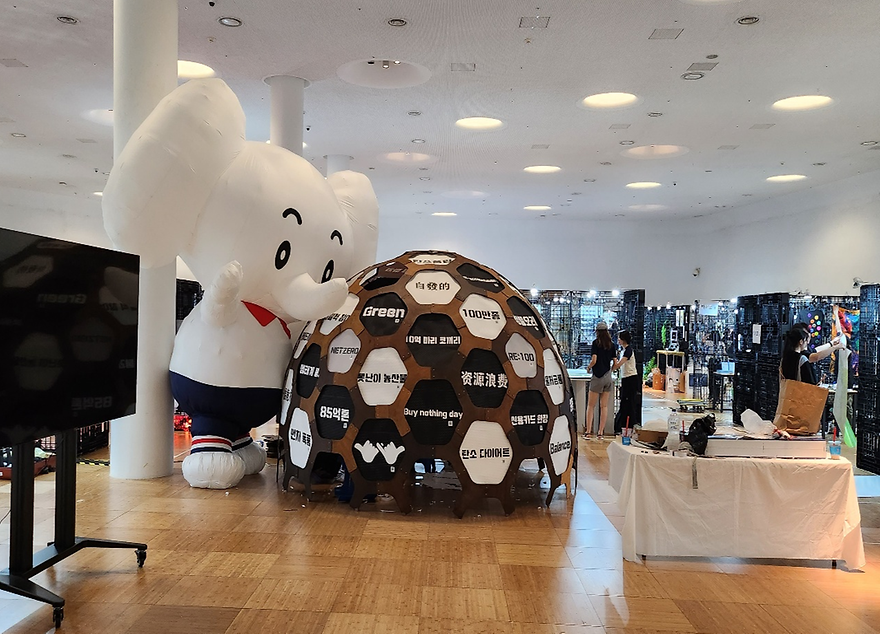
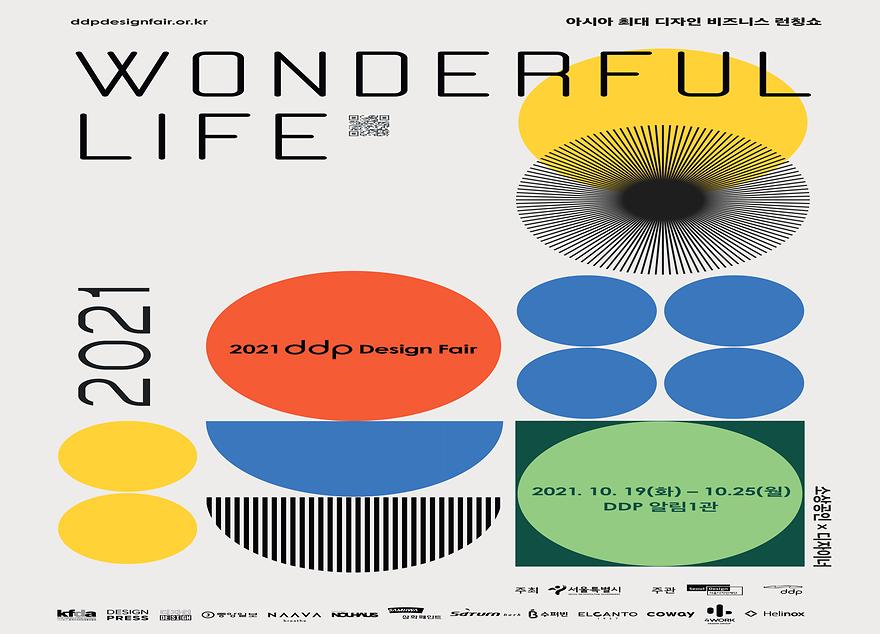
Students from the Department of Industrial Design, College of Architecture, Kookmin University, participated in the Happy Green Exhibition held at Dongdaemun Design Plaza (DDP). From Department of Industrial Design, students from Zappers (25), Vertex (21), and Stack (8), and about 54 students from the UROP class participated in the exhibition. The event took place from Tuesday, August 8th, to Sunday, August 13th , and was exhibited in Hall 2, Dongdaemun Design Plaza (DDP).
-
5
- 작성자강하늘
- 작성일2023-11-15
- 899
- 동영상동영상
-
Last May(2023. 5. 26 - 29), Students from Shibaura Institute of Technology visited our department to co-host and participate in the 2023 KMU-SIT Summer Workshop. Especially, on the first day of the event students from the both institutions teamed up to introduce their culture to each other. 35 participants from KMU (2 advisors) and 31 participants from SIT (1 advisor) formed 15 teams and worked together during the workshop. In the morning, as part of the 'User Experience Design' class, a second-year major class in the Industrial Design Department at Kookmin University, Shibaura students and Kookmin students teamed up to role-play a scenario in which AI systems were actively used in the home. The event was held in Room 315 on the 3rd floor of Kookmin University's Architecture Building. The teams were randomly assigned and had a few minutes to introduce themselves and get to know each other before the role-playing began. Each team chose one of the various housing types and then freely wrote scenarios and distributed roles. Students improvised their ideas accordingly to develop various design insights by discovering the expectations, discomforts, and points of attention or consideration that arise when AI enters the home. “I thought it would be similar because Japan also has a tea-drinking culture, but it seems that Japan is more formal and formalized than Korea. It was very interesting to learn about different cultures that seem to be the same.” - Kookmin University student who experienced the tea ceremony. After visiting the Myeongwon Folk Museum, students selected an exhibition that was held in the city and introduced the Japanese students to Korean culture. The Korean students chose to visit the National Museum of Modern and Contemporary Art, Seoul Craft Museum, and Hanji Culture, and Industry Center, and many of the Japanese students admired the unique beauty of Korean artworks and culture. In addition to the exhibition space, the students also visited places where they could feel and experience Korean culture, such as craft streets, Insadong Street, and Bukchon Hanok Village, where they were able to exchange with Japanese students about each other's culture, perspectives on artworks, values, and attitudes toward viewing and experiencing exhibitions. The Korean students were able to touch the Hanji and share their thoughts while viewing the artworks, while the Japanese students, on the other hand, mainly watched the artworks with their eyes and investigated the artworks personally rather than touching them. It was very interesting to see the differences, even in such small details. Finally, the workshop concluded with a dinner for all the students together. It was a short day, but it felt like it was just enough time to get to know each other, and many of them looked forward to meeting again in the winter at SIT-KMU Design Workshop. The KMU-SIT Summer Workshop provided an opportunity for creative idea-sharing between students from Korea and Japan and an experience of exchange and collaboration across cultural boundaries. By experiencing the beauty of Korean traditional culture and design, we were able to get closer to learning and understanding each other's cultures and develop the ability to design a better future with the power of design and culture.
-
3
- 작성자강하늘
- 작성일2023-11-15
- 994
- 동영상동영상